Porsche Mission S: The Analog Flagship
Porsche's Mission S concept previews a permanent mid-engined super sports car above the 911. Its boldest move isn't the bodywork but what the cabin leaves out: no center screen, no passenger display, just round gauges, physical switches and a dock for the phone you already carry.
A Pier in Queens
The Mission S premiered on October 15 on a pier in Queens, New York, the same spot where Porsche photographed the mid-engined 550 Spyder in 1953. Those images helped launch the brand in America. Bringing its next mid-engined flagship back there was a deliberate statement about where Porsche's future design comes from.
Porsche calls the Mission S a "vision model," not a production preview. But it also confirms something concrete: a new mid-engined super sports car platform that will sit above the 911 as a permanent part of the range. As chairman Michael Leiters put it, "A Porsche must be recognisable as a Porsche at first glance."
550 Spyder, 1953 + Mission S, 2026
Floating Volumes
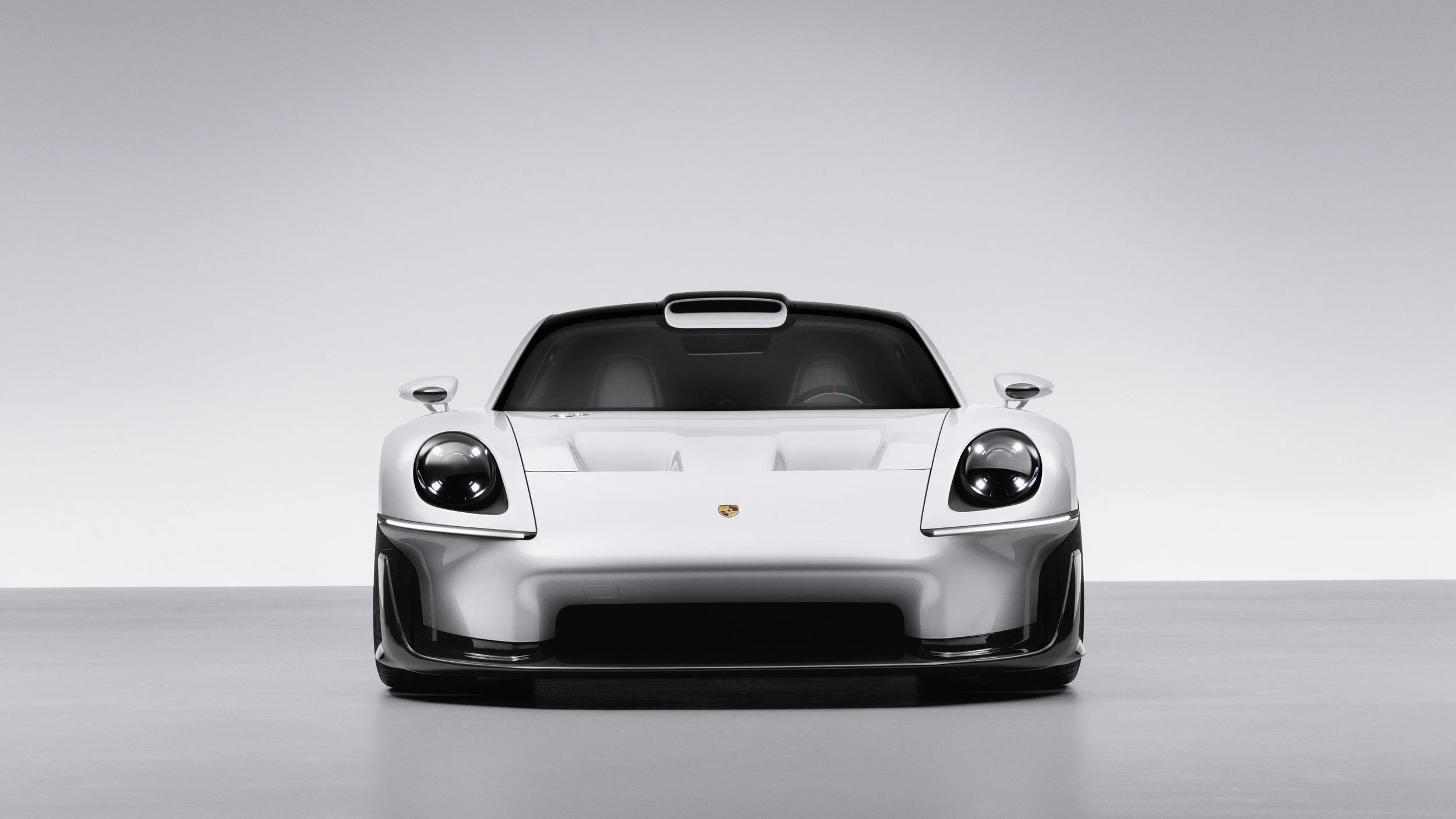
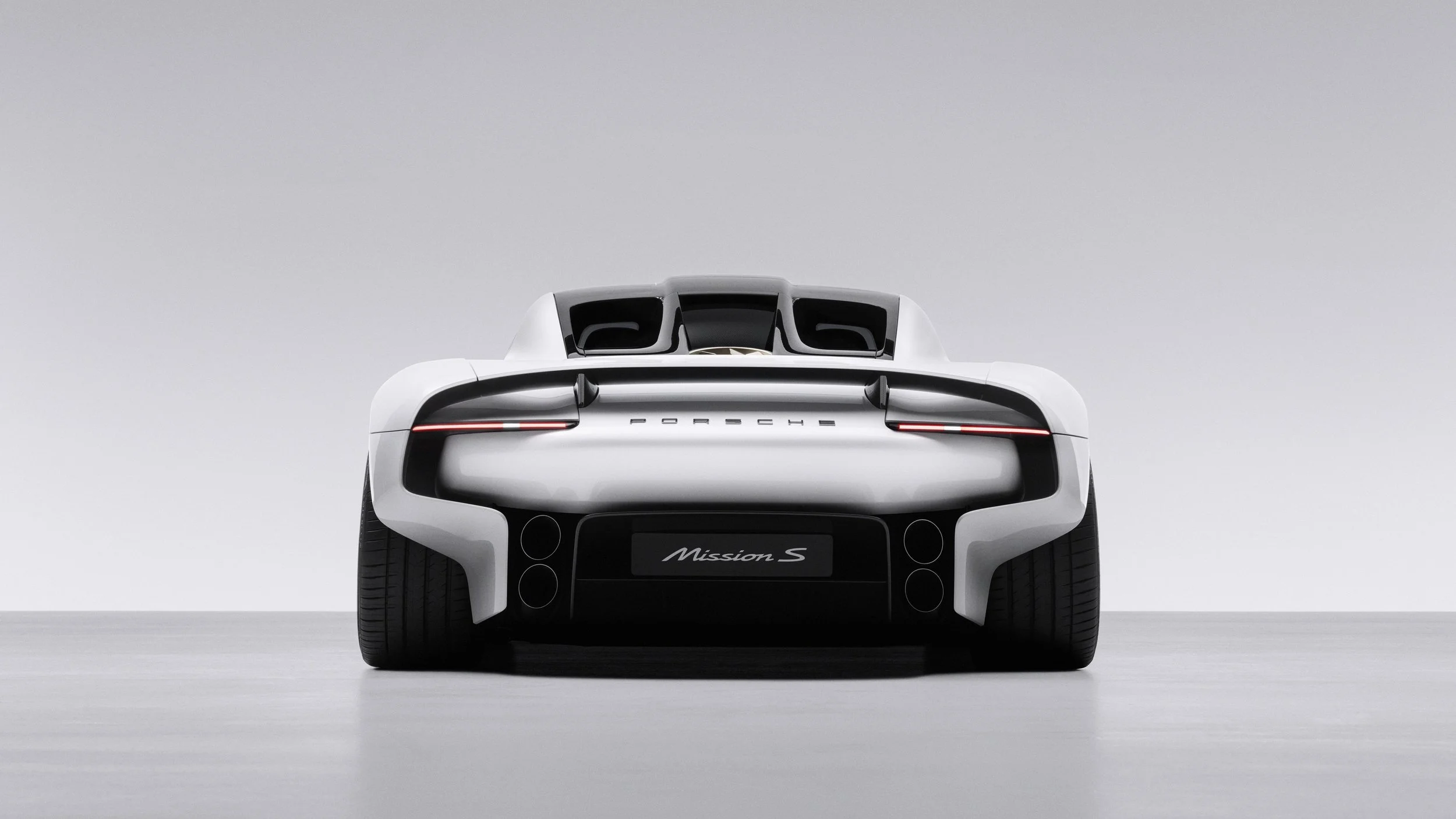
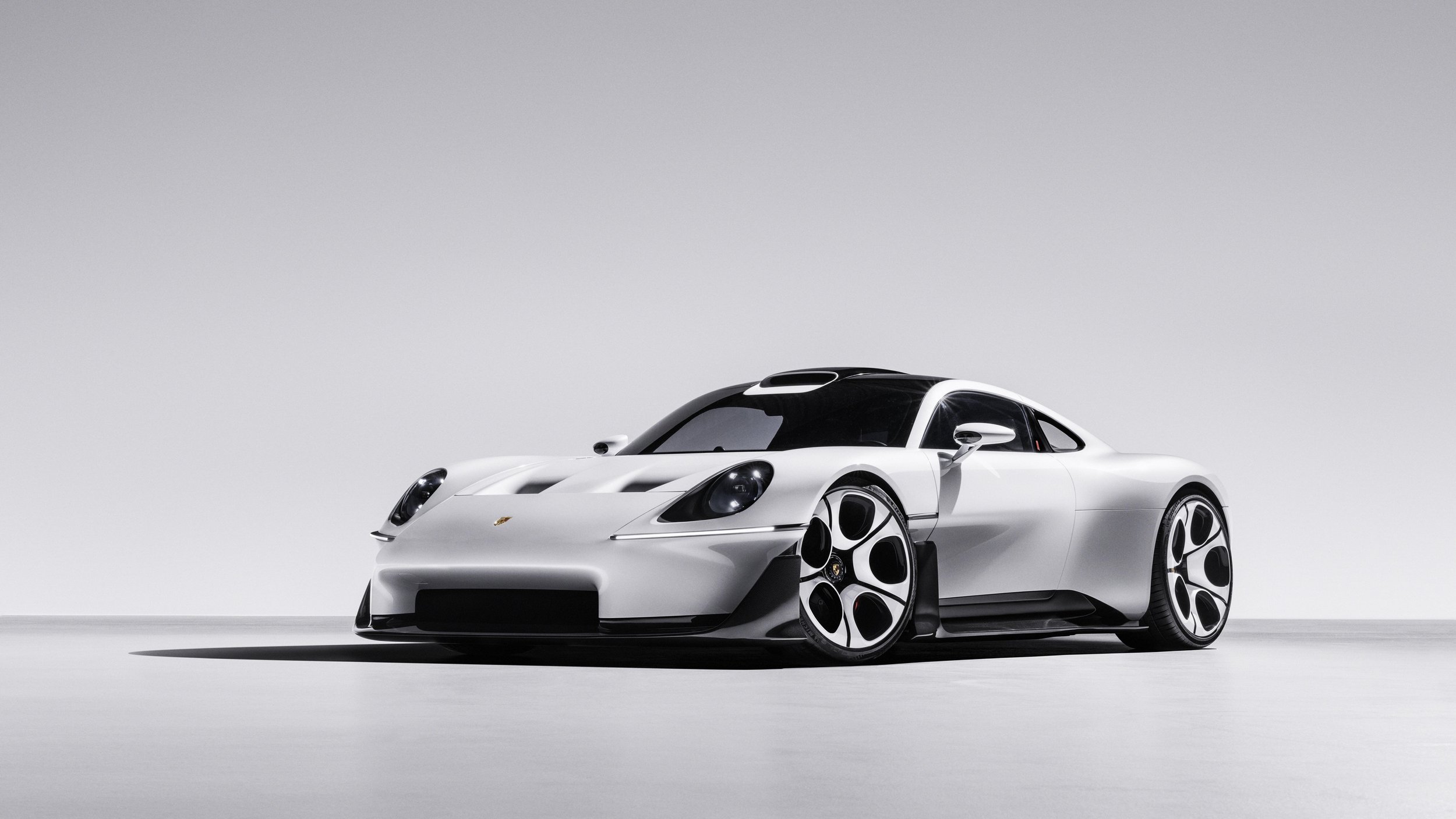
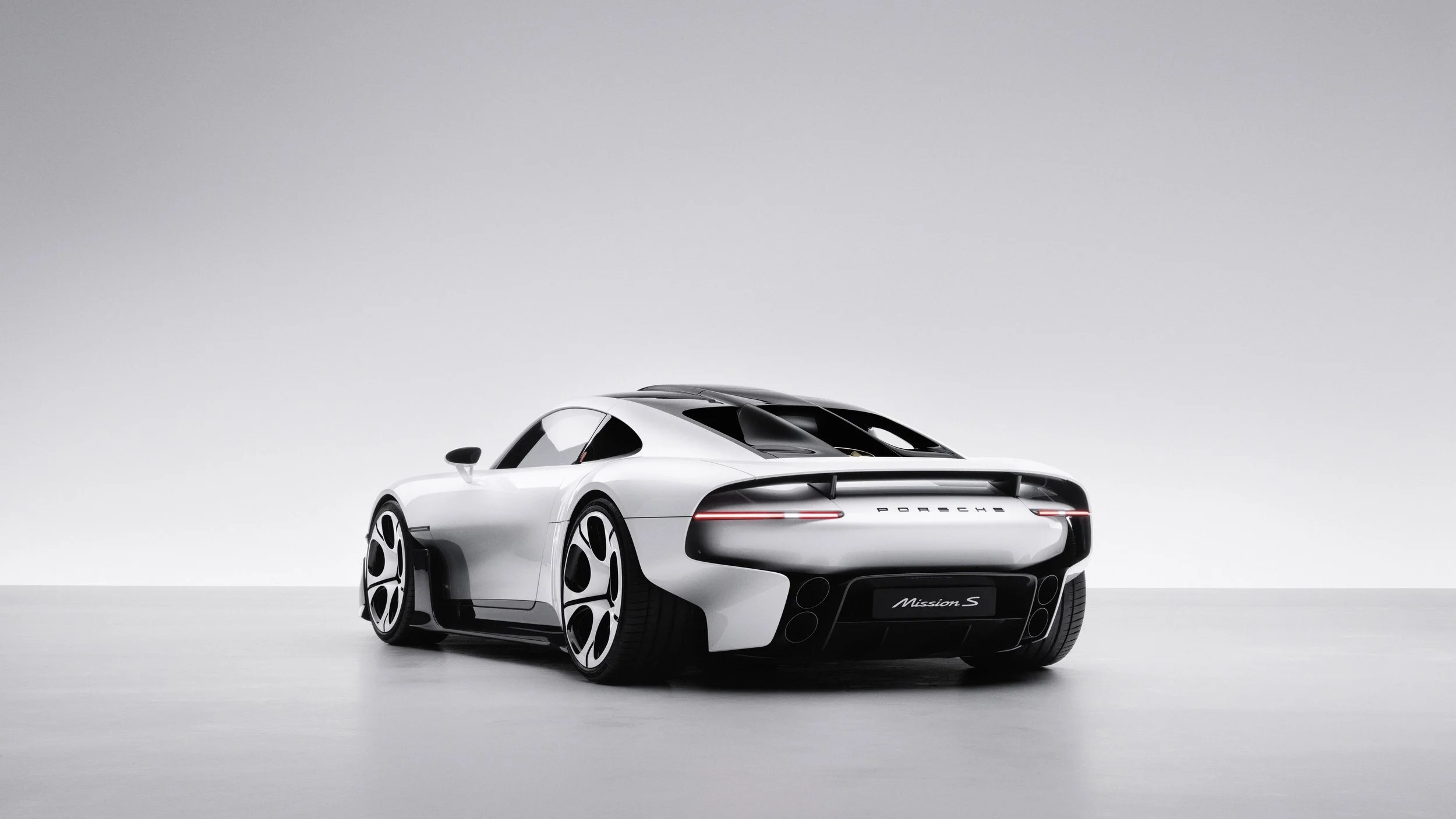
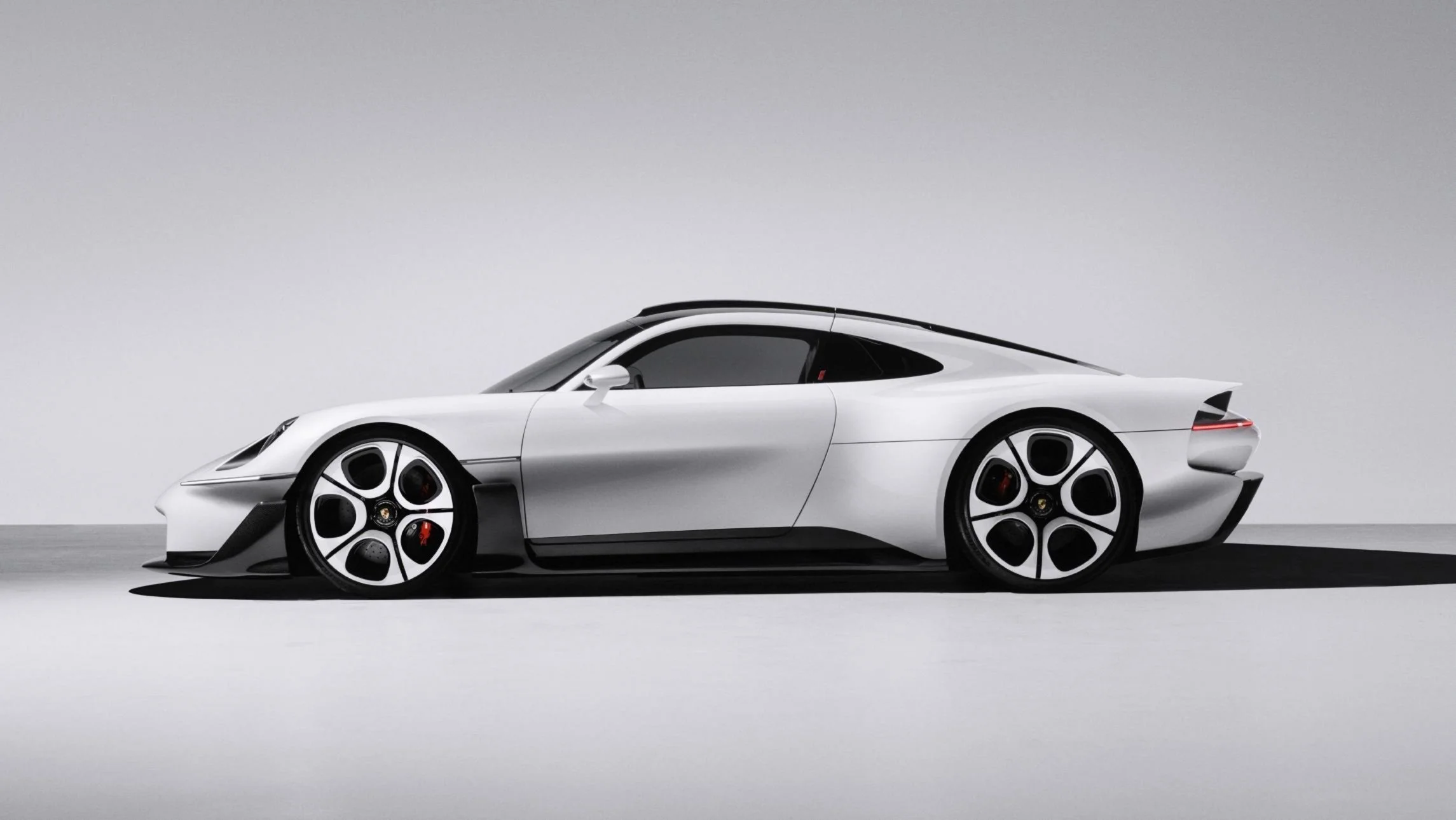
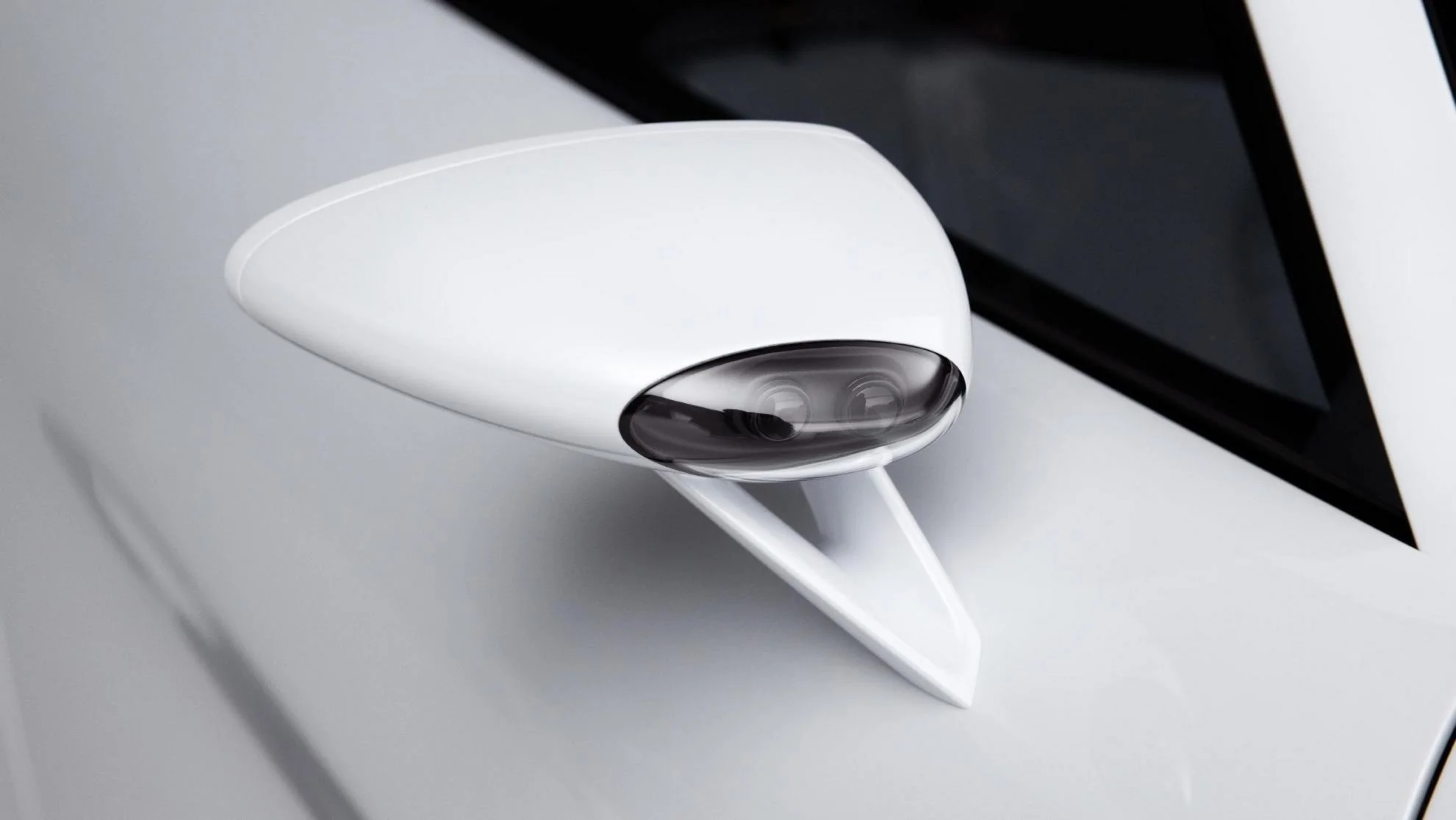
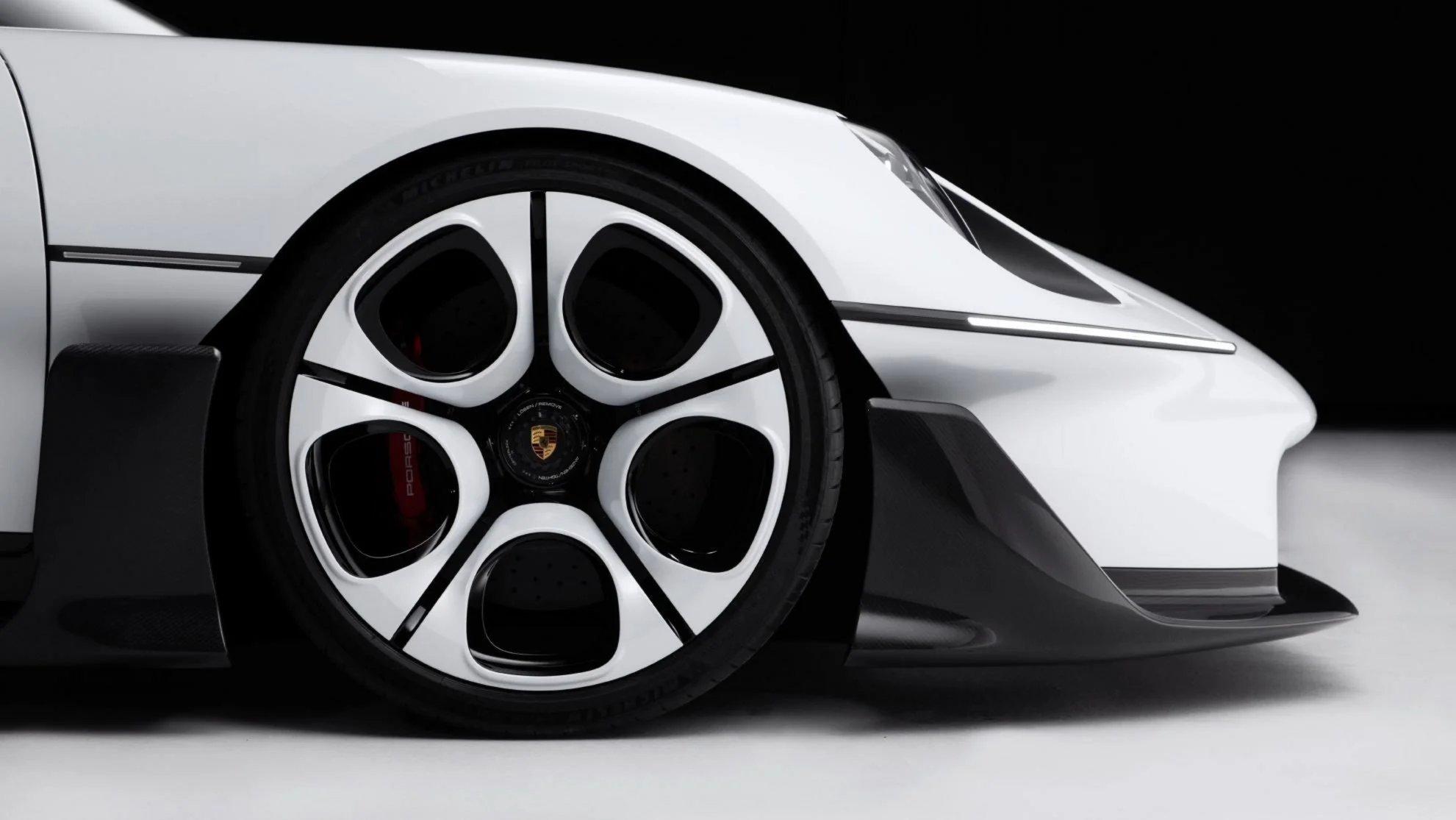
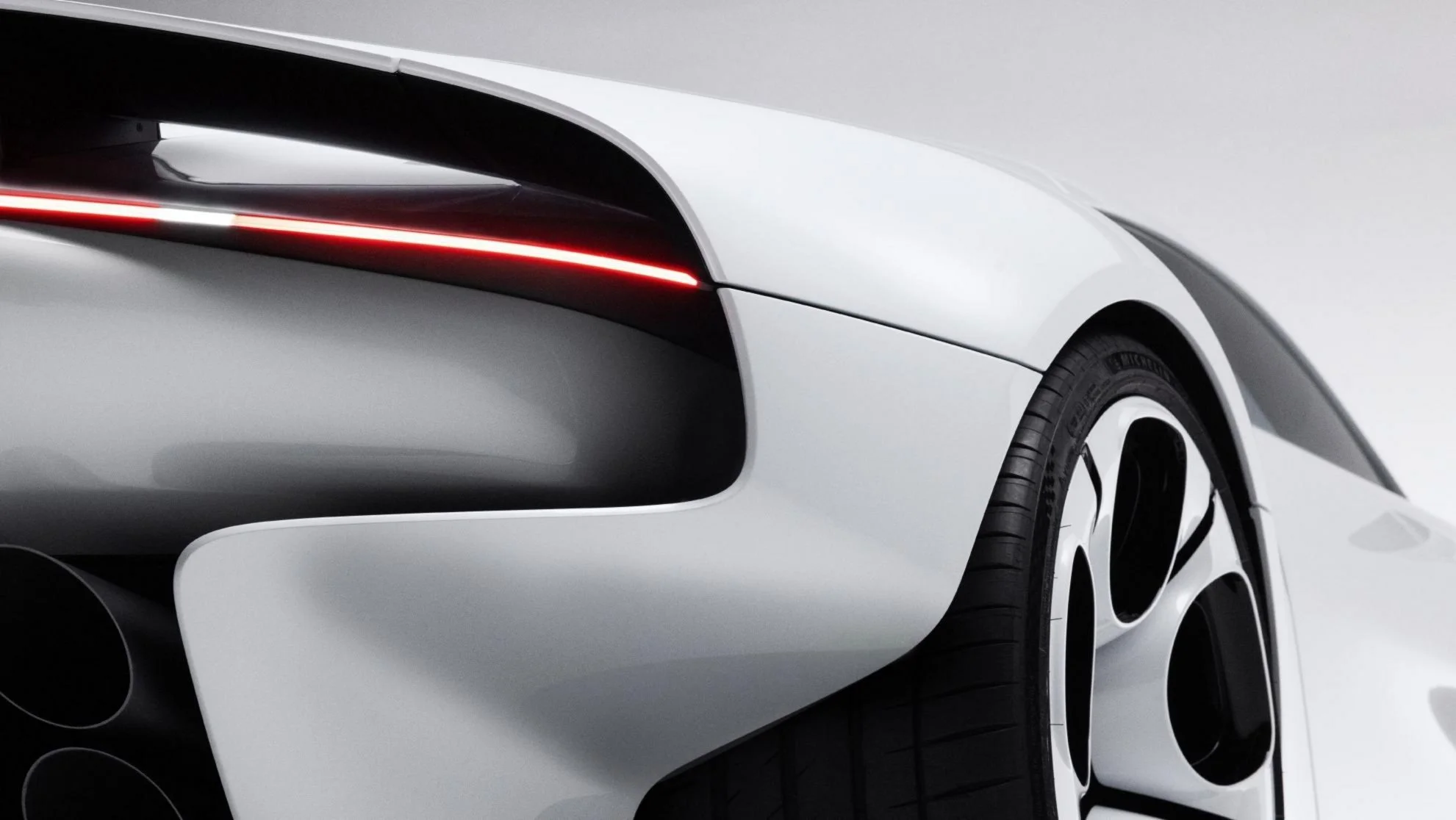
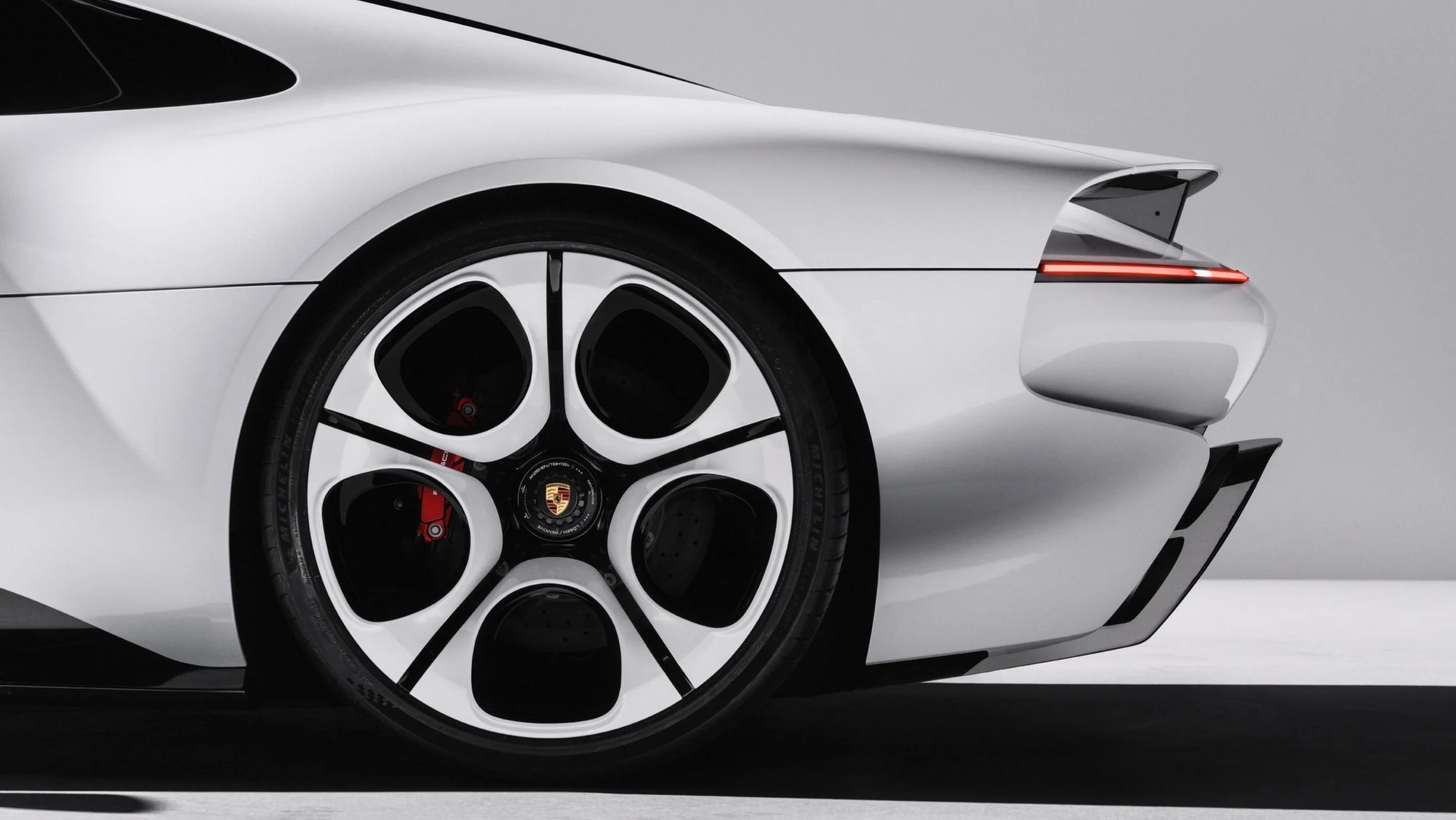
The exterior, led by Vice President Style Porsche Tobias Sühlmann, is a carefully edited set of references: 911 round headlights and torpedo fenders, a flat GT1 nose and "car-in-car" rear, a 959-style roofline under an active rear wing, a cooling fan that nods to the 917, and lightweight wheels based on the 928's "dial" design (Porsche Newsroom).
What holds it together is a single wraparound line connecting the front and rear lights. Above it, the surfaces are muscular and sculptural. Below it, technical elements stay visible. Emotion above the line, engineering below it. That rule is what keeps a set of heritage cues from turning into a collage.
A signature wraparound line connects the front and rear lights. Above it, the surfaces are muscular and sculptural.
The Screen That Isn't There
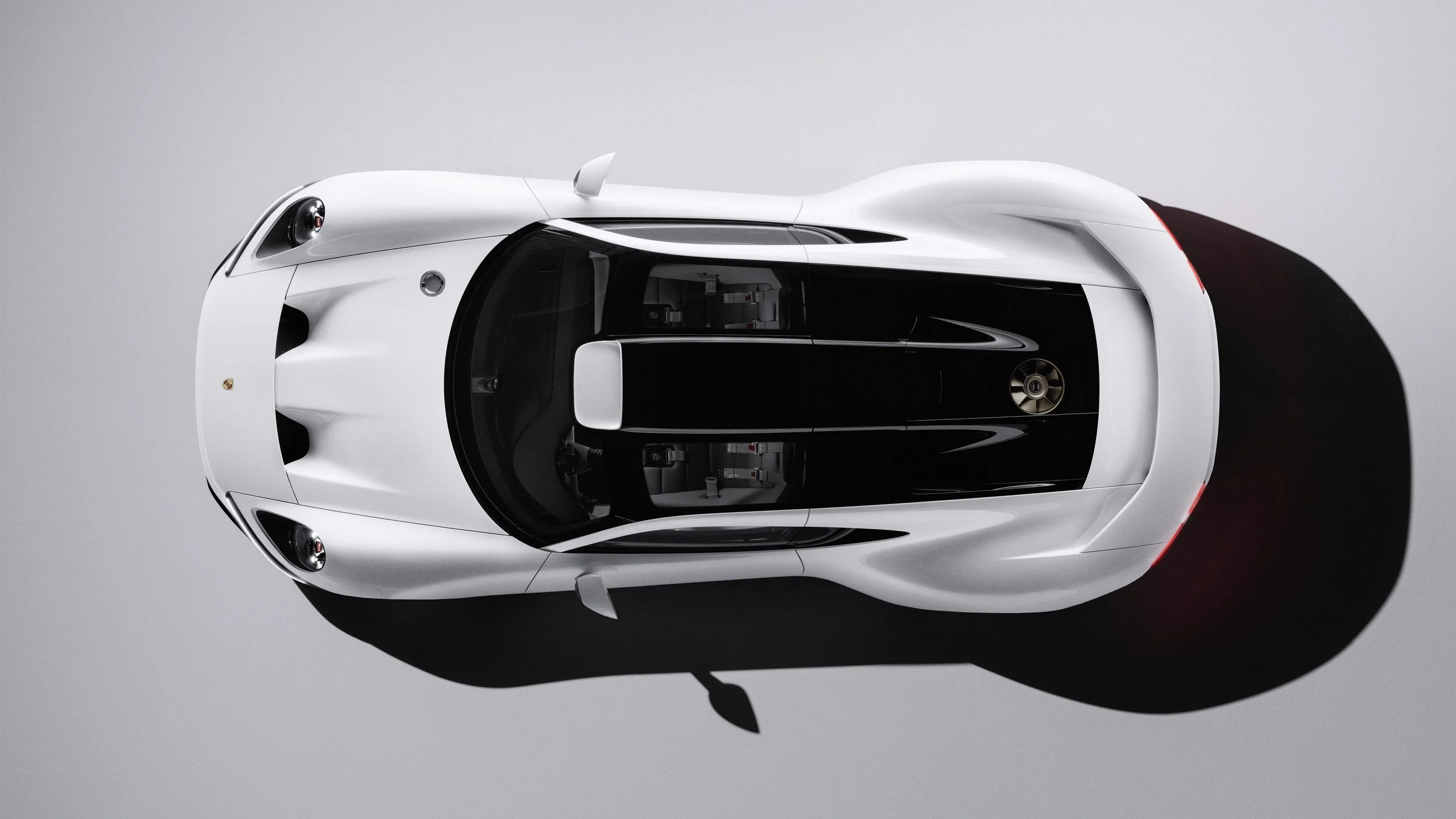
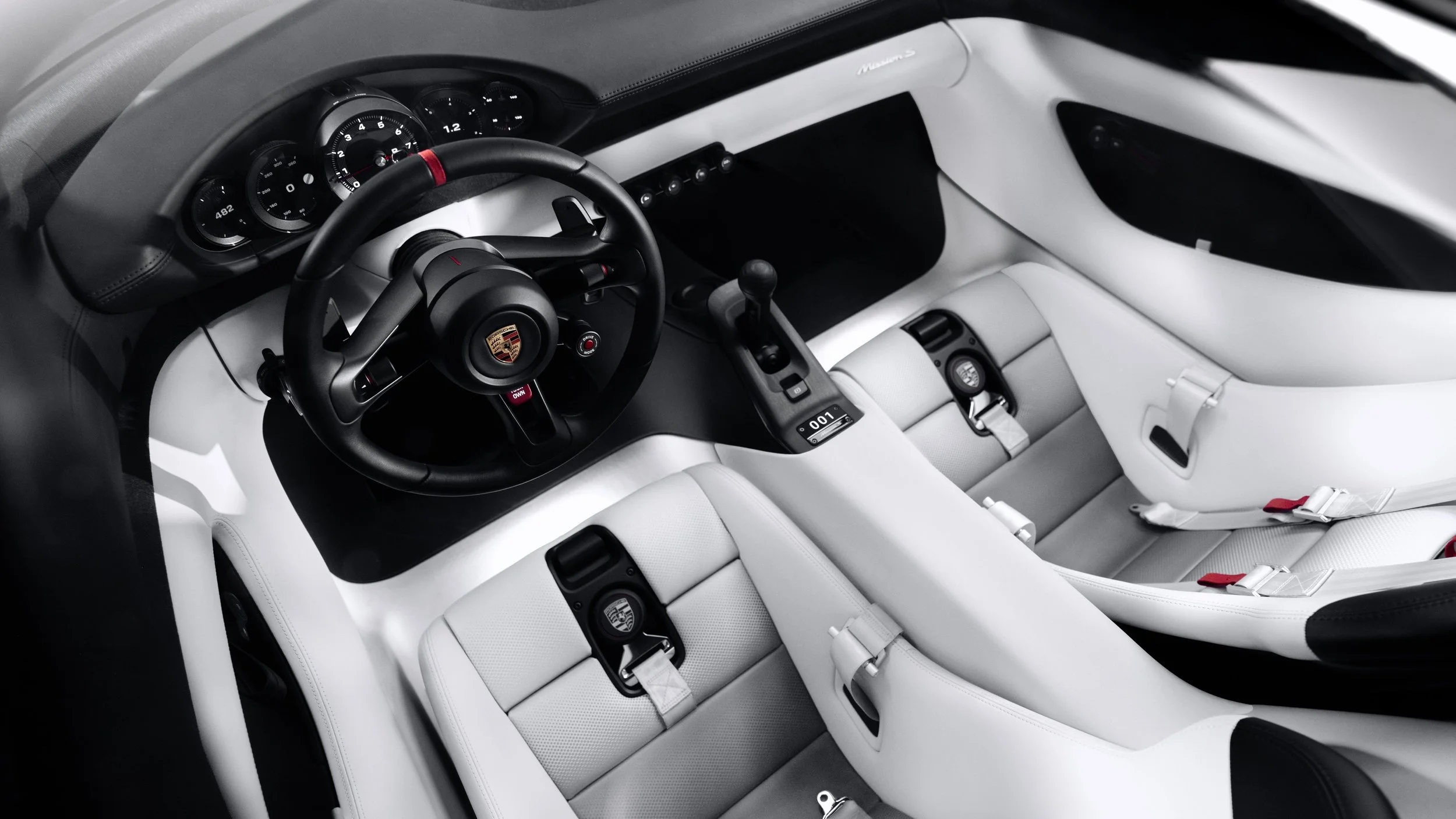
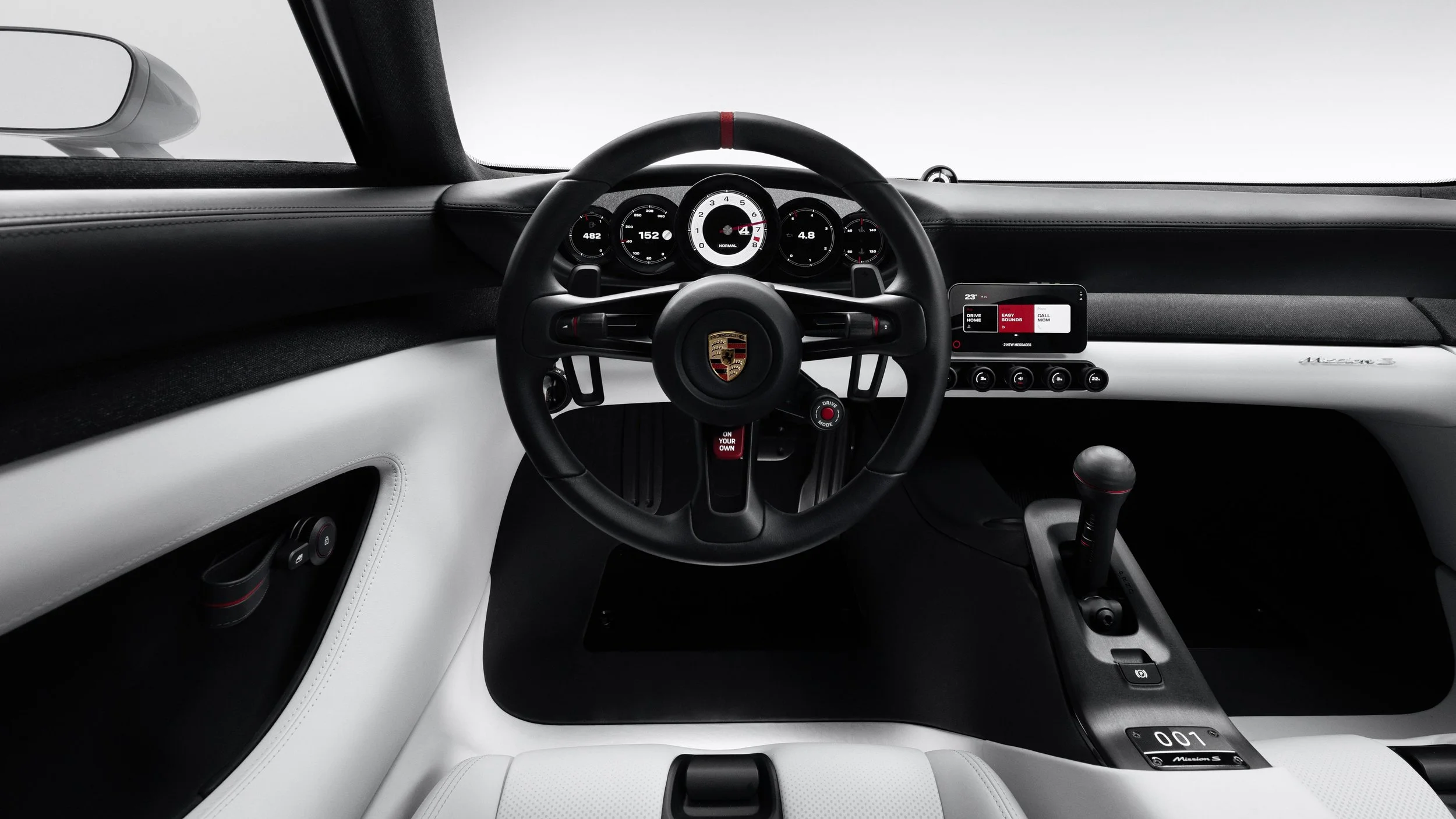
Inside, Porsche deliberately left out a fixed center display and passenger screen. Instead, a retractable MagSafe-compatible holder lets the driver's own phone serve as the navigation or information display, and the My Porsche app handles vehicle functions.
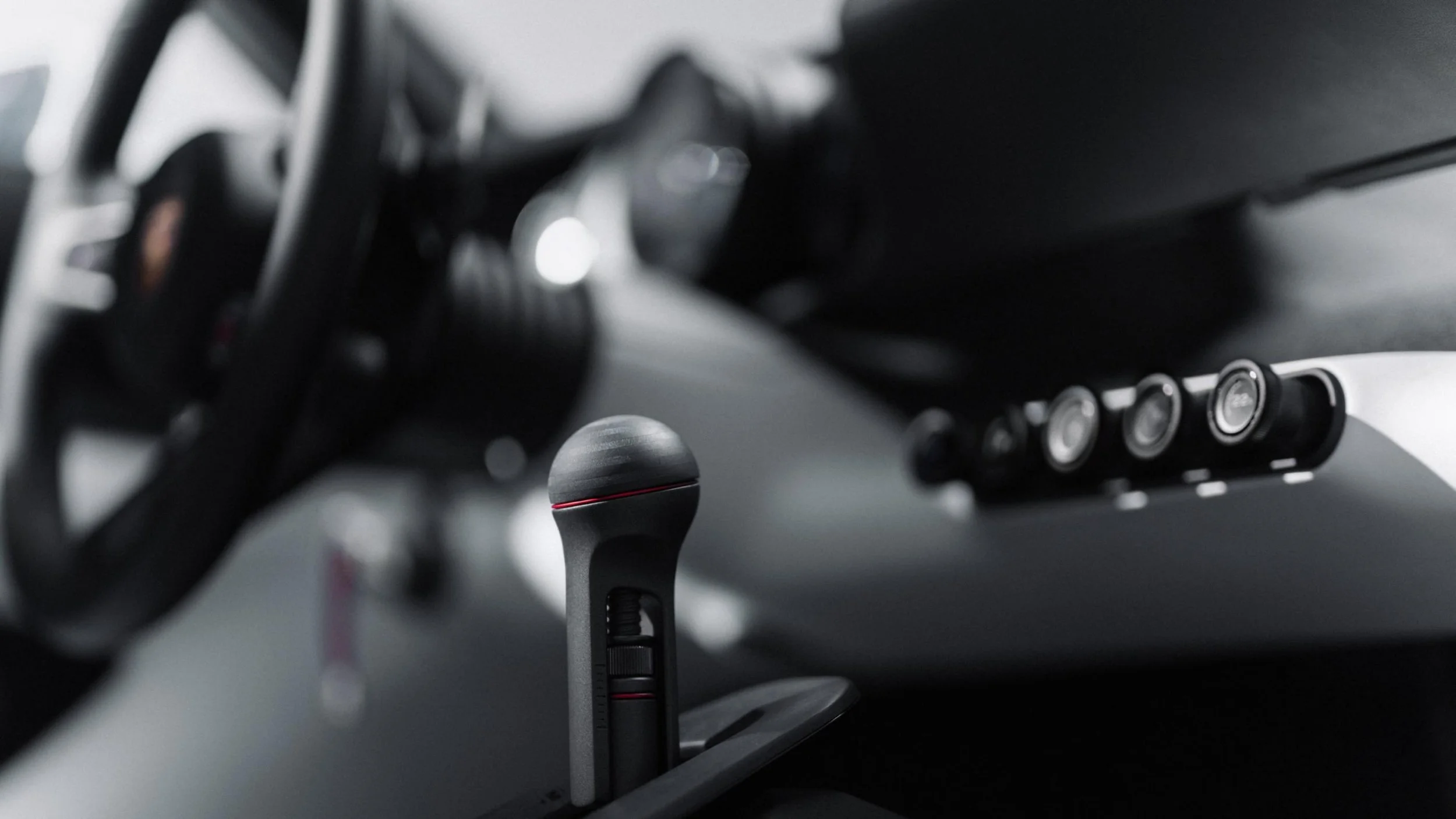
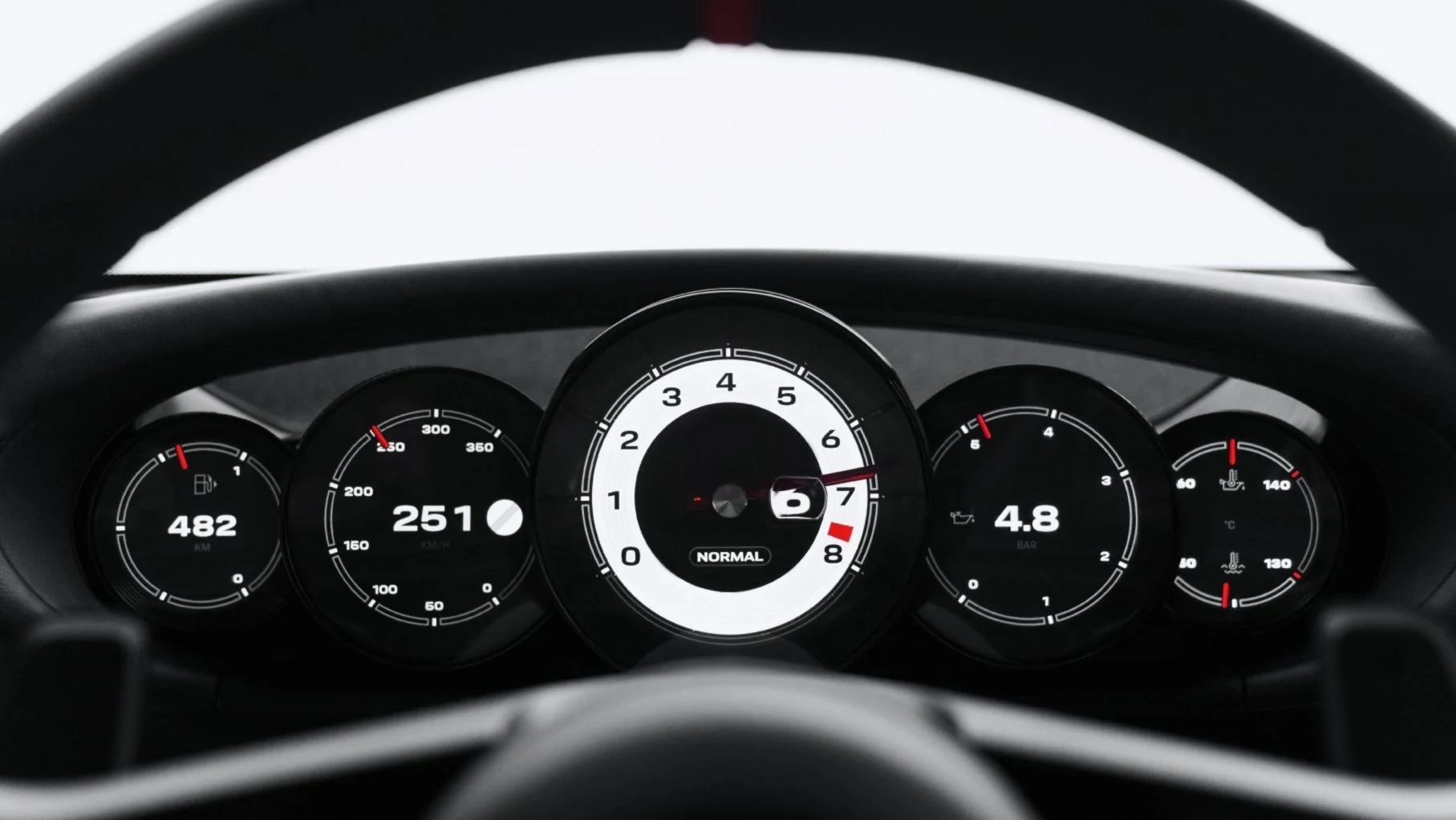
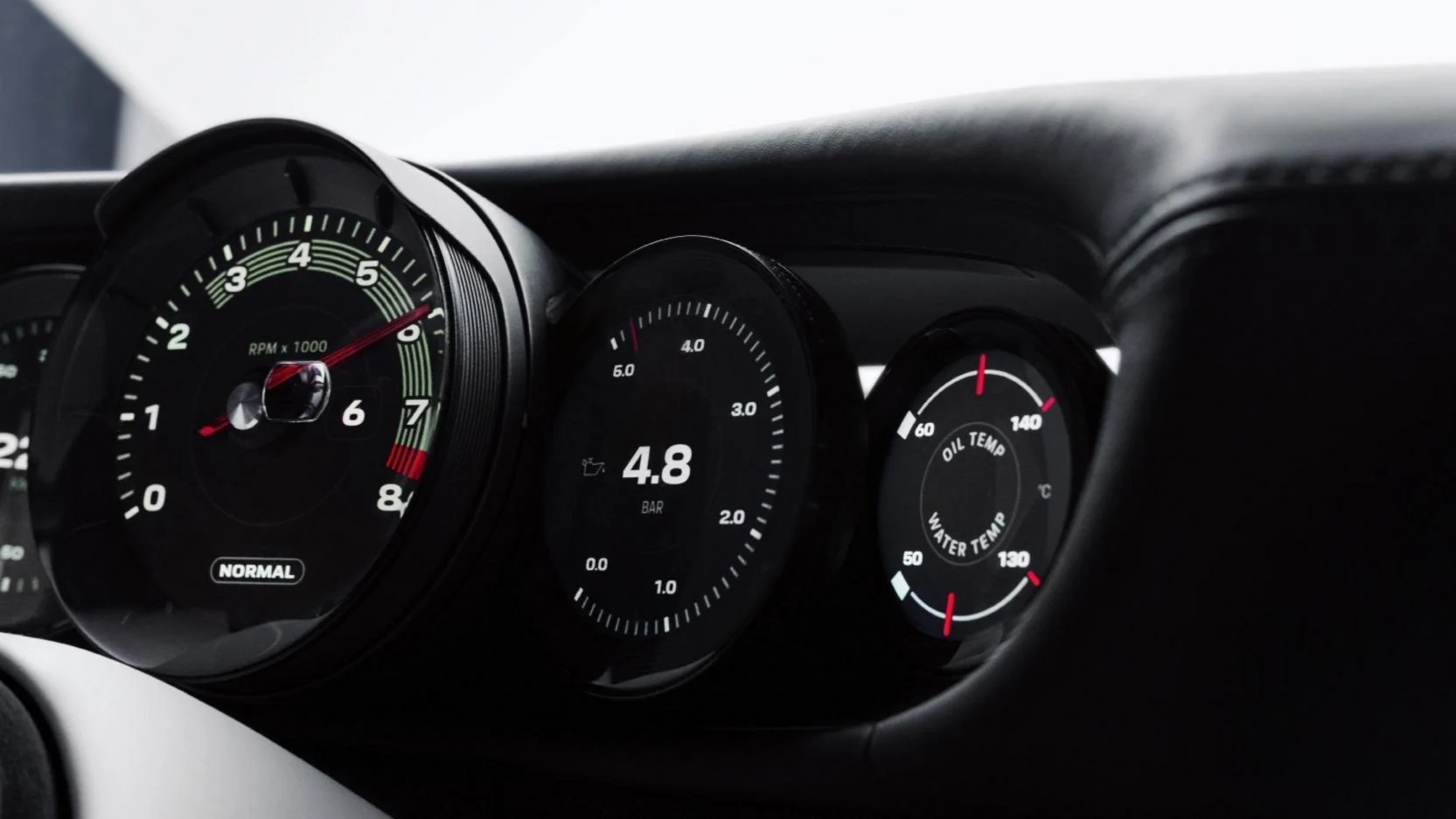
Everything else is built around the driver. Five round gauges sit behind the wheel, with a physical tachometer needle over a display, and their layout shifts with the drive mode. Push-pull switches, a dedicated key to the left of the wheel and a reimagined Sport Chrono clock complete the analog feel. Edmunds reports an 8,000-rpm redline.
In traditional fashion, five configurable digital gauges present driver-focused information without distraction.
Bring Your Own Interface
This isn't nostalgia. It's a separation of lifespans. A supercar should stay desirable for decades, while a built-in infotainment screen looks dated in a few years. Handing the general-purpose screen to the phone, which owners upgrade on their own, lets the permanent parts of the cabin stick to what doesn't age.
The open questions are real: MagSafe is an Apple technology (though the Qi2 standard uses similar magnetic alignment), and phone integration needs long-term software support. Those will decide whether the idea survives into production.
In a refreshing exercise of restraint, there is no center screen. The driver’s own phone docks on the dash instead.
Value Over Volume
The Mission S is the first product signal from Sportwagenschmiede '35, the strategy Porsche outlined on October 7. CNBC reported that it emphasizes higher-end products and value over volume. Unlike the limited-run Carrera GT and 918 Spyder, or the electric Mission X concept, this platform is meant to last, and Edmunds reports it will take combustion or hybrid power, not fully electric. Engine, performance, price and timing have not been announced.
Why It Matters for Design
Heritage needs a rule. The wraparound line turns references into a coherent design.
Fewer screens can signal premium. At the top of the market, restraint reads as confidence.
Durable interfaces for a durable product. A permanent model line favors controls that age well over screens that don't.
Key Specifications
Vision model previewing a permanent mid-engined super sports car above the 911 (Porsche)
World premiere: October 15, 2026, Queens, New York (Porsche)
No fixed center or passenger display; retractable MagSafe-compatible phone holder (Porsche)
Five round gauges with physical tachometer needle; 8,000-rpm redline (Porsche, Edmunds)
Active rear wing; 928-inspired wheels, 21 in. front and 22 in. rear (Porsche, Edmunds)
Combustion or hybrid power; output, weight and price not announced (Porsche, via Edmunds)
For more information, visit Porsche Newsroom.
Images: Porsche