DJI Dock 4: The Drone Race Is Moving Beyond the Aircraft
The next frontier in drones isn’t simply flying farther, capturing better images, or avoiding obstacles more intelligently. It’s about seamless system integration, greater autonomy, and removing humans from the operational loop. DJI continues to push these boundaries, innovating rapidly across the entire ecosystem.
DJI’s Dock 4, points toward that future: an automated drone station designed to support remote operations, with battery-swapping capability that can reduce downtime and enable more continuous missions.
This is the kind of innovation that should get the entire industry’s attention. DJI isn’t just developing aircraft; it’s building an integrated system spanning hardware, charging infrastructure, automation, software, and remote operations. That shift transforms the drone from a tool that someone takes out and flies into a service that can be deployed repeatedly with far less hands-on intervention.
A Systemic Offering
For competitors, the challenge is clear: catching up on specifications isn’t enough. They need to innovate at the system level. Better cameras and longer flight times matter, but so do autonomous deployment, rapid turnaround, fleet management, reliability, and the experience of operating multiple aircraft at scale.
There are legitimate opportunities for competitors to differentiate through security, domestic supply chains, specialized industrial applications, and regulatory compliance. But those advantages won’t compensate indefinitely for a slower pace of product innovation.
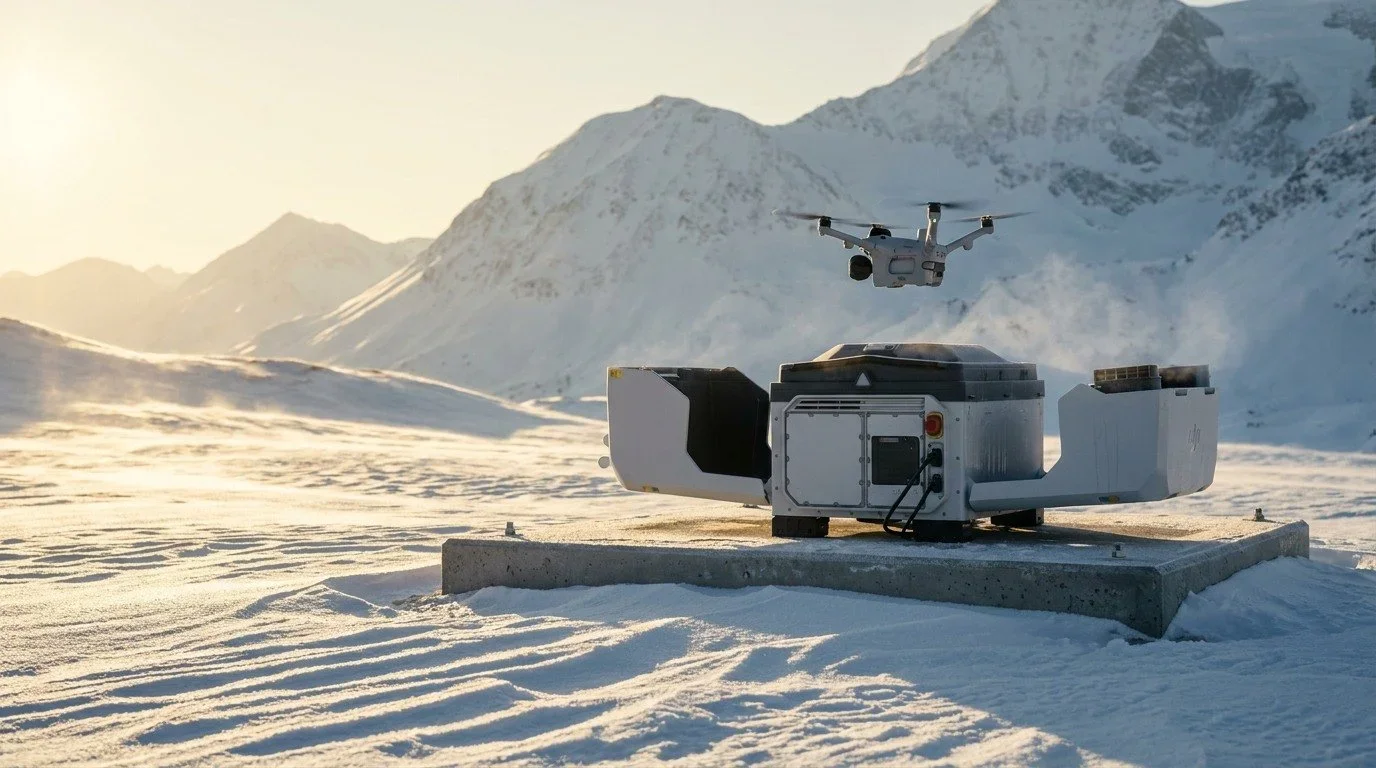
The DJI Dock 4 is highly operational in bad weather and is specifically engineered to remain outdoors and handle harsh environmental conditions.
DJI is also pushing the boundaries of all-weather operations. The Dock 4’s IP56-rated protection, integrated climate control, and battery preheating enable operation across extreme temperatures, while the Matrice 5TD supports takeoff and landing in winds up to 12 m/s. Automated safety protocols add another layer of resilience, helping the system respond when conditions exceed safe operating limits.
Weather & Operational Limits
The DJI Dock 4 relies on robust environmental protection and an internal climate control system to withstand the elements:
Ingress Protection: It features an IP56 rating, offering strong protection against dust and high-pressure water jets from any direction. [1]
Extreme Temperatures: It operates reliably in temperatures ranging from -40°C to 50°C (-40°F to 122°F). [1]
Climate Control: To manage these temperature extremes, the dock features automatic battery pre-heating for freezing winters and integrated air conditioning to prevent overheating during intense summer heat. [1, 2]
Wind Resistance: The dock and its accompanying drone (the Matrice 5TD) support a maximum allowable landing and takeoff wind speed of 12 m/s. [1, 2]
Emergency Wind Protocol: If wind speeds spike past safe limits while the drone is in flight, its automated Wind-Exceed Descend-and-Return protocol safely forces it to descend and navigate back home. [1]
DJI is also preparing to introduce a vehicle-mounted drone docking and battery-swapping solution, further extending its operational reach beyond fixed installations. By enabling mobile deployment and rapid turnaround in the field, this approach could expand the role of autonomous aerial systems across a range of infrastructure and emergency-response contexts, from early wildfire detection and search-and-rescue operations to utility inspections and remote asset monitoring.
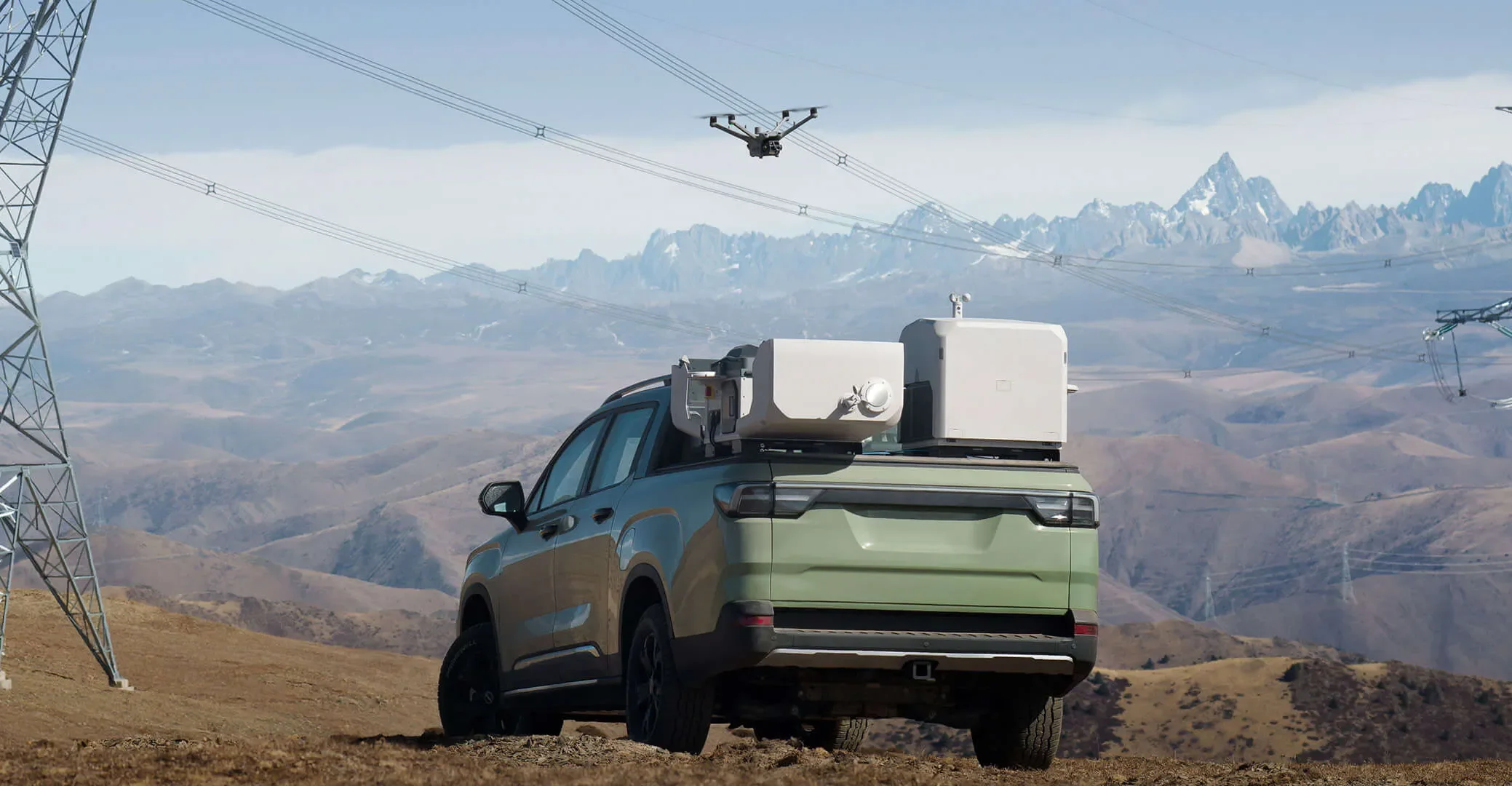
DJI continues to push the boundaries of autonomous flight, extending its ecosystem with an upcoming vehicle-mounted drone docking system that brings aerial capability directly to the road.
The bigger lesson extends beyond drones. Market leaders create distance when they connect individual technologies into a coherent, compelling experience. DJI is demonstrating what that looks like in autonomous flight. Its competitors need to move faster—not just to match the latest product, but to anticipate what the entire category becomes next.
The question isn’t who can build a better drone. It’s who can build the better autonomous aerial system.