From Making Cars to Making Intelligence
XPENG is betting that the next generation of mobility won't be defined by horsepower, but by physical intelligence. For more than a century, the automobile has been an extraordinarily capable machine—but fundamentally, it has remained a machine. We designed it to carry us, then progressively added sensors, software and artificial intelligence to make it safer, more efficient and increasingly autonomous. Now XPENG is proposing something considerably more ambitious: that the automobile become part of a much larger Physical AI ecosystem.
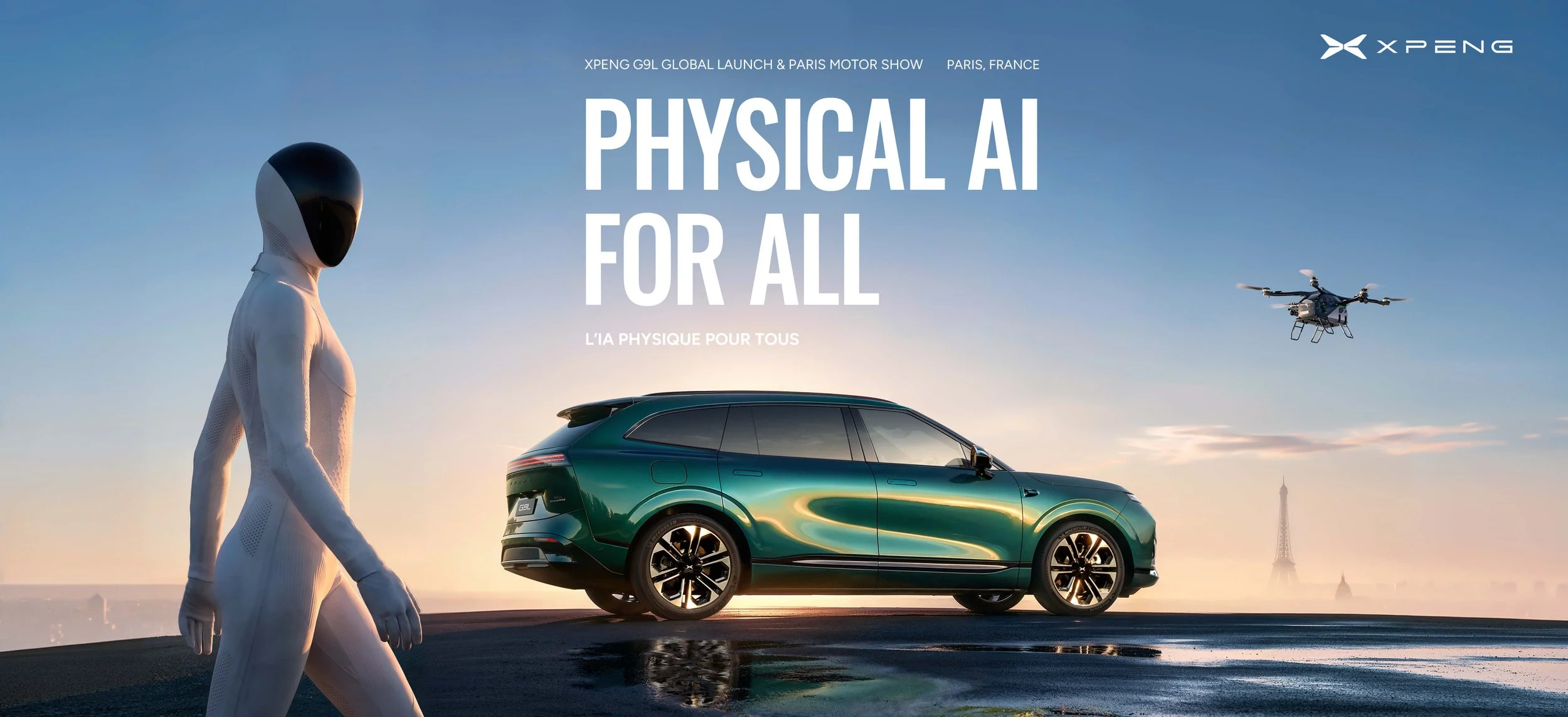
At the 2026 Paris Motor Show, XPENG plans to present what it calls a "Physical AI Museum," bringing together AI-defined vehicles, humanoid robots, robotaxis and flying cars. Rather than treating these as separate products, XPENG sees them as different physical expressions of a common intelligence platform. (xpeng.com)
From Smart Cars to Physical Intelligence
The technology industry has spent the last several years teaching AI to understand words, images and digital environments. Physical AI takes the next step: machines that can perceive the physical world, reason about it and act within it.
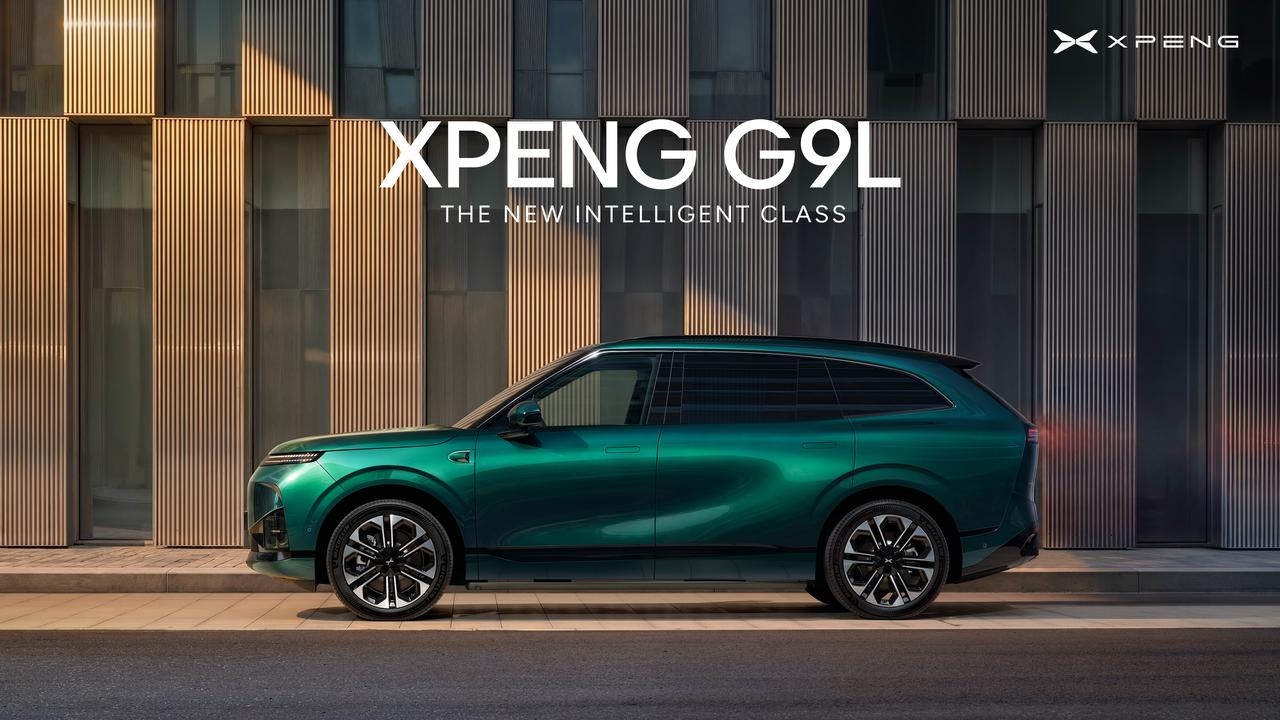
The G9L flagship SUV will make its global launch at the Paris Motor Show, with European order books open and pricing revealed, reinforcing XPENG’s premium positioning globally.
A car is one embodiment of that intelligence. A humanoid robot is another. A robotaxi, factory machine or flying vehicle could be another. The physical form becomes almost secondary to the intelligence that allows the machine to understand its environment and perform useful actions within it.
XPENG is building toward this model with its own AI chips, foundation models, autonomous-driving systems and robotics programs. Its Turing AI chips are designed to support applications ranging from intelligent vehicles to robots and flying cars. (xpeng.com)
When the Factory Starts Making Robots
Perhaps more significant is XPENG's move from humanoid-robot development toward manufacturing. The company has commissioned a dedicated production line for its IRON humanoid robot, applying the manufacturing expertise developed through the automotive industry to robotics.
This points toward an intriguing possibility: the future of the automobile industry may not be limited to making better automobiles. The factories, supply chains, batteries, motors, sensors and production systems developed for cars could become the foundation for an entirely new generation of intelligent machines.
One Brain, Many Bodies
This creates a very different design challenge. Instead of designing a machine and then adding intelligence, we may increasingly design an intelligence system first and give it different physical forms.
The car has wheels. The robot has legs. The flying vehicle has wings. But underneath, they can potentially share perception, reasoning, prediction, planning and decision-making capabilities.
That changes the role of the designer. The question is no longer simply how a car should look or how a person should interact with an autonomous vehicle. It becomes a much larger question: What should an intelligent machine feel like when it inhabits our physical world?
From Products to Ecosystems
For decades, automotive differentiation was built around styling, performance, efficiency, comfort and quality. Software became the next competitive layer, followed by AI. Physical AI could take that evolution one step further.
The advantage may increasingly belong to companies that can connect AI models, sensors, actuators, manufacturing, data and real-world deployment into a continuously improving system. The vehicle becomes one node in that system; the robot, factory and infrastructure become others.
XPENG's strategy may ultimately prove too ambitious. The technical, regulatory and economic challenges are enormous. But the direction is worth watching because the bigger transition may be from intelligent products to intelligent physical systems.
The automobile was one of the great machines of the industrial age. The next mobility revolution may not be about inventing a better car, but about making the things around us intelligent enough to move, adapt and act on our behalf.
The car might just be the first robot we live with.