

Mercedes-Benz Vans
Redefining Cargo Delivery.
Exploring the Future of Goods Movement and the Growth of a Design Thinking Culture
This collaboration explored the future of goods transportation through design thinking and rapid prototyping, helping shape the Mercedes-Benz adVANce initiative and lay the foundation for their Silicon Valley innovation lab.
By prototyping concepts like one-shot loading, driver prompting systems, and smart bins, the team validated key ideas early and influenced the final Van of the Future concept. Low- to mid-fidelity experience prototypes helped align cross-functional stakeholders, expedite decision-making, and demonstrate the feasibility of the idea. The Mercedes-Benz Vans group ultimately implemented these concepts as a high-fidelity concept demonstrator. Integrated warehouse loading systems were also explored to streamline logistics. These systems enabled deliveries to be staged while vehicles were en route, thereby reducing idle time and enhancing delivery efficiency. Tailored loading solutions were developed for the Sprinter and Metris vans, supporting flexible last-mile delivery scenarios and future partnership opportunities.
Impact
A central goal was to build prototyping fluency within the Mercedes-Benz Vans team. A year later, the impact was clear: a culture of experimentation and agile development had taken root at their new research lab in Silicon Valley.
_____
“I cannot stress enough the fact that we learned a lot of methodology and cultural aspects through the fruitful and enjoyable cooperation with you and your team. You helped us lay the foundations for what we have achieved so far. Thank you very much again for that support. ”
Related Services
Interaction Design, Purposeful Strategy
Role
Interaction Design Director, Client Relationship Lead
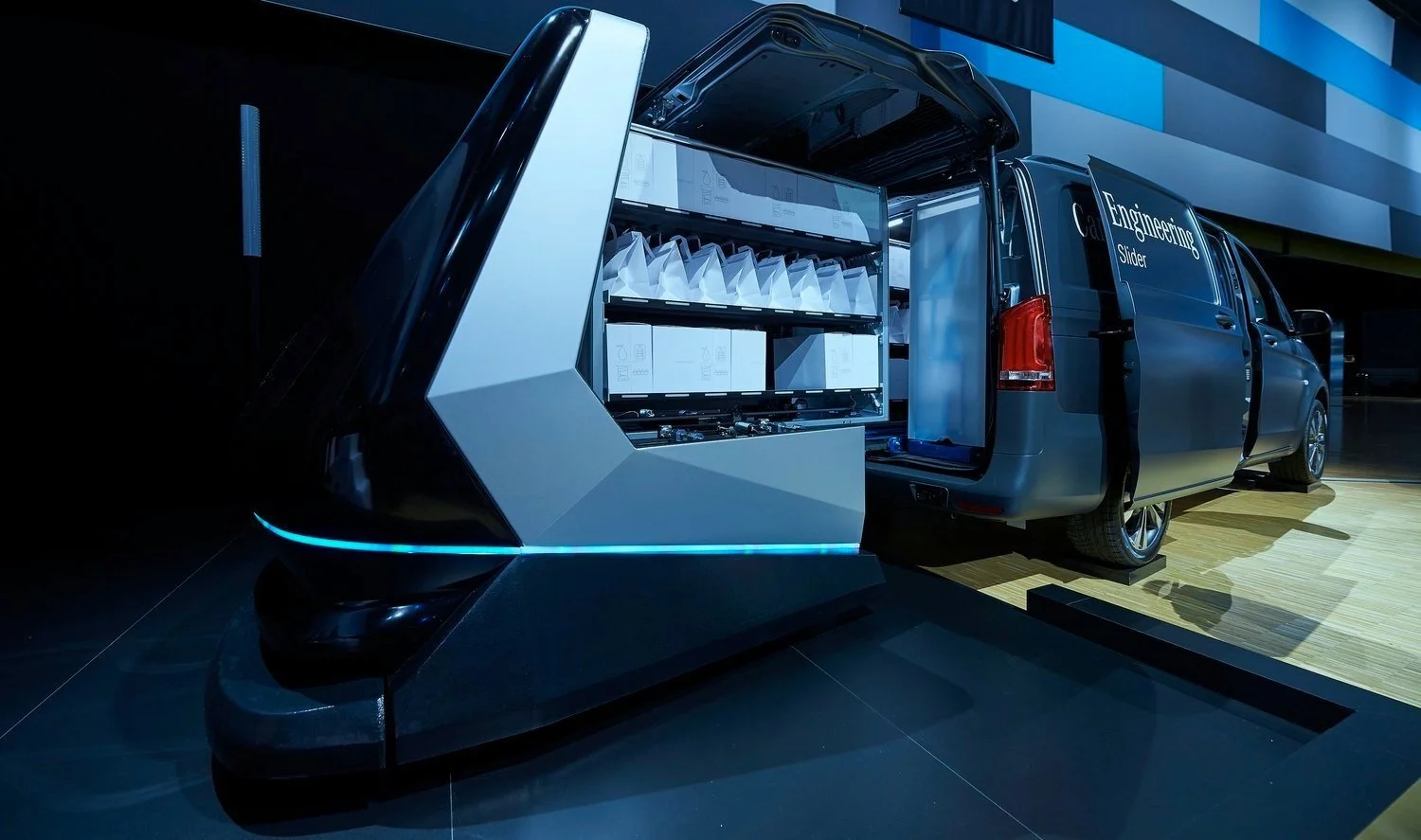
Mercedes-Benz Vans ultimately produced a highly detailed, functional model of the cargo handling concept developed during the project, bringing the envisioned solution to life and demonstrating its real-world feasibility.
One of the final concepts is known as “Slider.” This brief video highlights the key features and functionality of the design, which emerged through an iterative prototyping process focused on efficiency, automation, and ease of use.
This video captures the spirit of hands-on hardware and software prototyping embodied in the Mercedes-Benz Vans Silicon Valley Lab, where ideas were quickly brought to life through iterative design, testing, and interdisciplinary collaboration.


Early design concepts explored a diverse range of ideas involving purpose-built vehicles, modular loading racks, and intelligent object tracking software—laying the foundation for an integrated cargo handling system.


From early concept sketches to rough prototypes the team shaped each aspect of the cargo Van of the Future vision including one-shot loading, driver prompting systems, and smart bins.
AdVANce videos and images: Mercedes Benz Vans


