July 20, 1969: When Humanity Chose to Do the Impossible
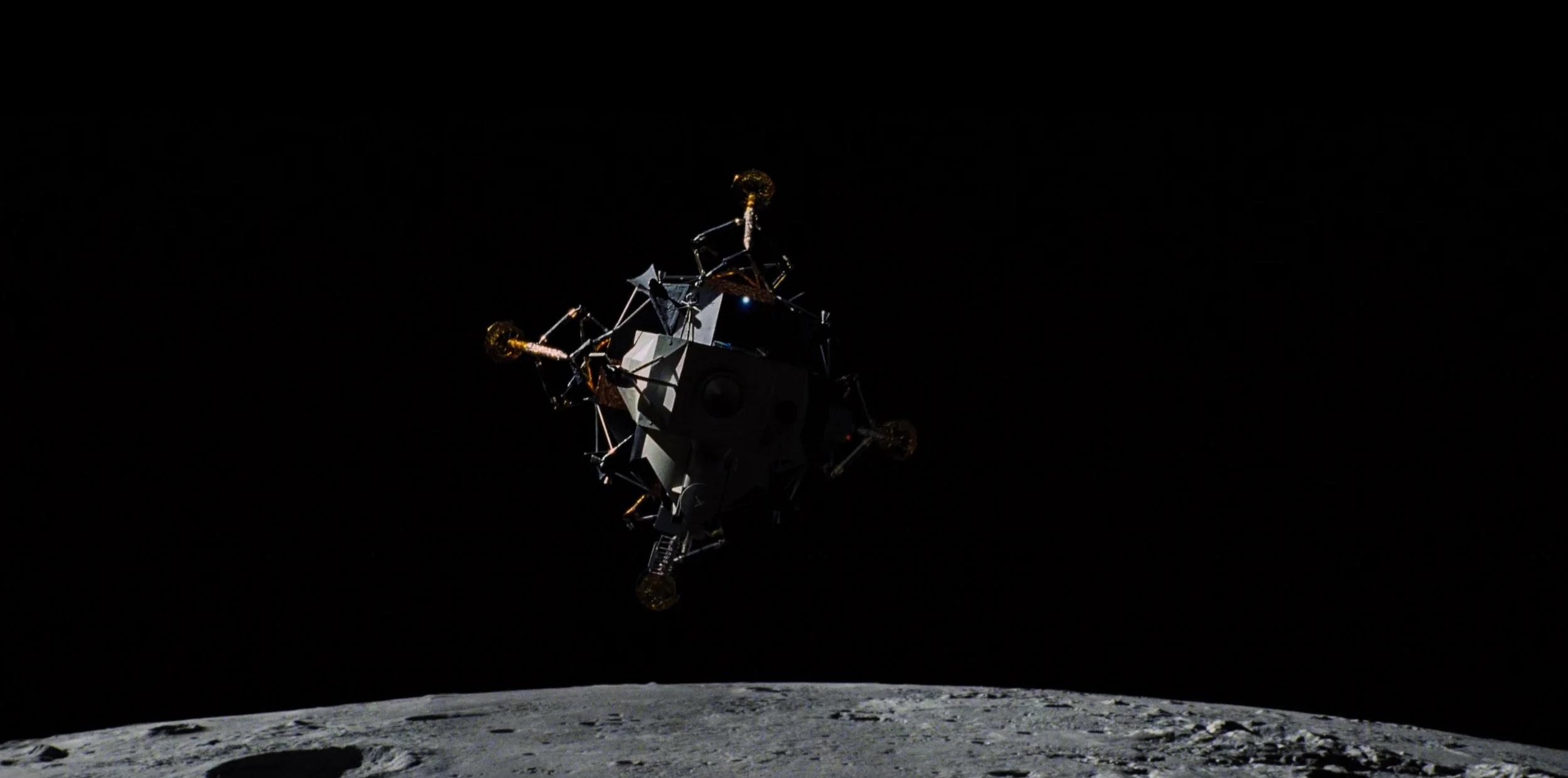
On July 20, 1969, a fragile machine carrying two human beings descended toward the lunar surface. As the Lunar Module Eagle approached its landing site, alarms sounded in the cockpit. Fuel reserves dwindled. The onboard computer struggled under an unexpected workload. Ahead lay a field of boulders large enough to destroy the spacecraft.
At 4:17 PM EDT, Neil Armstrong's voice crackled across nearly a quarter million miles of space:
"Houston, Tranquility Base here. The Eagle has landed."
In that moment, humanity achieved something that had existed only in imagination for thousands of years.
More than half a century later, it is easy to focus on the astronauts whose names became synonymous with the mission. Yet the Apollo 11 landing was not the accomplishment of three astronauts, nor even a single space agency. It was the culmination of one of the largest and most complex human endeavors ever undertaken.
Behind Armstrong, Aldrin, and Collins stood more than 400,000 people.
Engineers designed guidance computers with less processing power than today's simplest electronic devices. Technicians assembled spacecraft from millions of individual components. Mathematicians calculated trajectories that would carry humans to another world and safely return them home. Flight controllers developed procedures for failures they hoped would never occur. Manufacturers across the United States built parts to tolerances that often bordered on the unimaginable.
Each person solved a small piece of a problem that had never before been solved.
What makes Apollo remarkable is not merely that it reached the Moon. It is that it did so in less than a decade.
When President Kennedy challenged the nation in 1961 to land a man on the Moon before the end of the decade, no American had yet orbited the Earth. The technologies, organizational structures, manufacturing capabilities, operational procedures, and scientific understanding required to accomplish the goal largely did not exist. The mission was not a matter of execution. It was a matter of invention.
The men and women of NASA's Apollo program did more than land on the Moon. They expanded humanity's sense of what could be accomplished. They proved that bold visions are not fantasies when matched with commitment, ingenuity, and perseverance.
NASA and its partners had to create the future they intended to inhabit.
The agency built new launch vehicles, new spacecraft, new navigation systems, new materials, new testing methodologies, and entirely new approaches to managing risk. Along the way came tragedy, setbacks, failures, and lessons written in sacrifice. The Apollo 1 fire served as a sobering reminder that exploration extracts a price from those willing to venture beyond known boundaries.
Yet the effort continued.
Viewed through the lens of systems thinking, Apollo represents one of history's greatest examples of coordinated human action. Thousands of organizations, countless disciplines, and hundreds of thousands of individuals aligned around a singular objective. Scientists, machinists, programmers, welders, administrators, contractors, pilots, and policymakers became parts of an immense human system dedicated to achieving the seemingly impossible.
The Moon landing was not simply a technological achievement. It was a demonstration of what becomes possible when vision, talent, discipline, and collective purpose converge.
Today, we often speak about grand challenges: climate resilience, clean energy, advanced manufacturing, artificial intelligence, autonomous mobility, and humanity's return to the Moon and eventual journey to Mars. These ambitions can feel overwhelming in their scale and complexity.
Apollo reminds us that the impossible is often just a problem whose solution has not yet been organized.
The men and women of NASA's Apollo program did more than land on the Moon. They expanded humanity's sense of what could be accomplished. They proved that bold visions are not fantasies when matched with commitment, ingenuity, and perseverance.
Fifty-seven years later, the footprints at Tranquility Base remain undisturbed.
More importantly, so does the example.
July 20, 1969, stands as a reminder that some of humanity's greatest achievements begin with a simple decision: to attempt something worthy of our collective potential, even when success is far from certain.
The Moon landing was a triumph of engineering.
It was also a triumph of imagination.
And perhaps that is its most enduring legacy.
Video: First Man. | Universal Pictures